This presentation was developed and used as part of the workshop AI in the Classroom: Hands On! 1.0, delivered by Fabiana Farías. The workshop aimed to introduce educators to the educational potential of AI-generated songs and to provide practical experience in using Suno AI to create classroom resources for language learning. Through the exploration of song-based activities and hands-on practice, participants examined how music can support vocabulary development, pronunciation practice, student engagement, creativity, and meaningful language use. By the end of the workshop, participants were able to identify the pedagogical benefits of using songs in the language classroom, create effective prompts for generating educational songs, use Suno AI to produce music aligned with specific learning objectives, and design classroom activities that integrate AI-generated songs into their teaching practice. This presentation is shared as an open educational resource for educators interested in exploring the use of artificial intelligence and music to enhance language learning and classroom engagement.
Clasificación Curricular
Ficha del recurso
Zhang, Y., Baills, F., & Prieto, P. (2023). Singing songs facilitates L2 pronunciation and vocabulary learning: A study with Chinese adolescent ESL learners. Languages, 8(3), Article 219. https://doi.org/10.3390/languages8030219
Urbaite, G. (2025). Learning languages through music and songs: Cognitive, pedagogical, and affective dimensions. Porta Universorum, 1(4), 45–58. https://doi.org/10.69760/portuni.0104004
Willis, J. (2023, May 3). Using music during instruction to support cognition. Edutopia. https://www.edutopia.org/article/using-music-support-deeper-learning/
Ludke, K. M. (2009). Teaching foreign languages through songs. Institute for Music in Human and Social Development, University of Edinburgh.
Note. All images included in this presentation were created by Fabiana Farías using Canva and ChatGPT (OpenAI, 2026).
Recursos relacionados
Using AI songs 2.0
This presentation explores the pedagogical use of songs for developing listening comprehension skills in the language classroom. It begins by revisiting the educational value of music, highlighting its contribution to student motivation, engagement, pronunciation development, vocabulary learning...
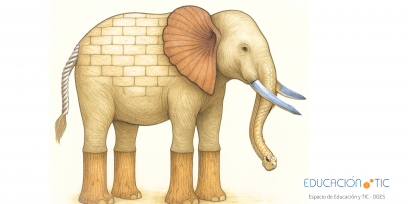
Interweaving Evidence (Assessment)
Using the Blind Men’s Lesson, this resource guides teachers to collect and connect evidence for deeper, more accurate student assessment.
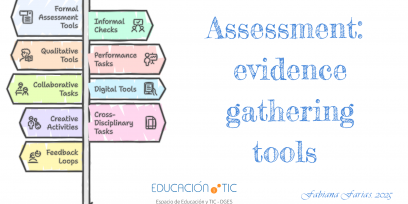
Gathering Evidence: Assessment Tools
Practical guide to evidence-gathering tools for assessment in Uruguay, combining theory and classroom practice, from tests to creative tasks.